2026-10-24 ·
Spring Pollen and Your Air Conditioning Filters in Manatee County
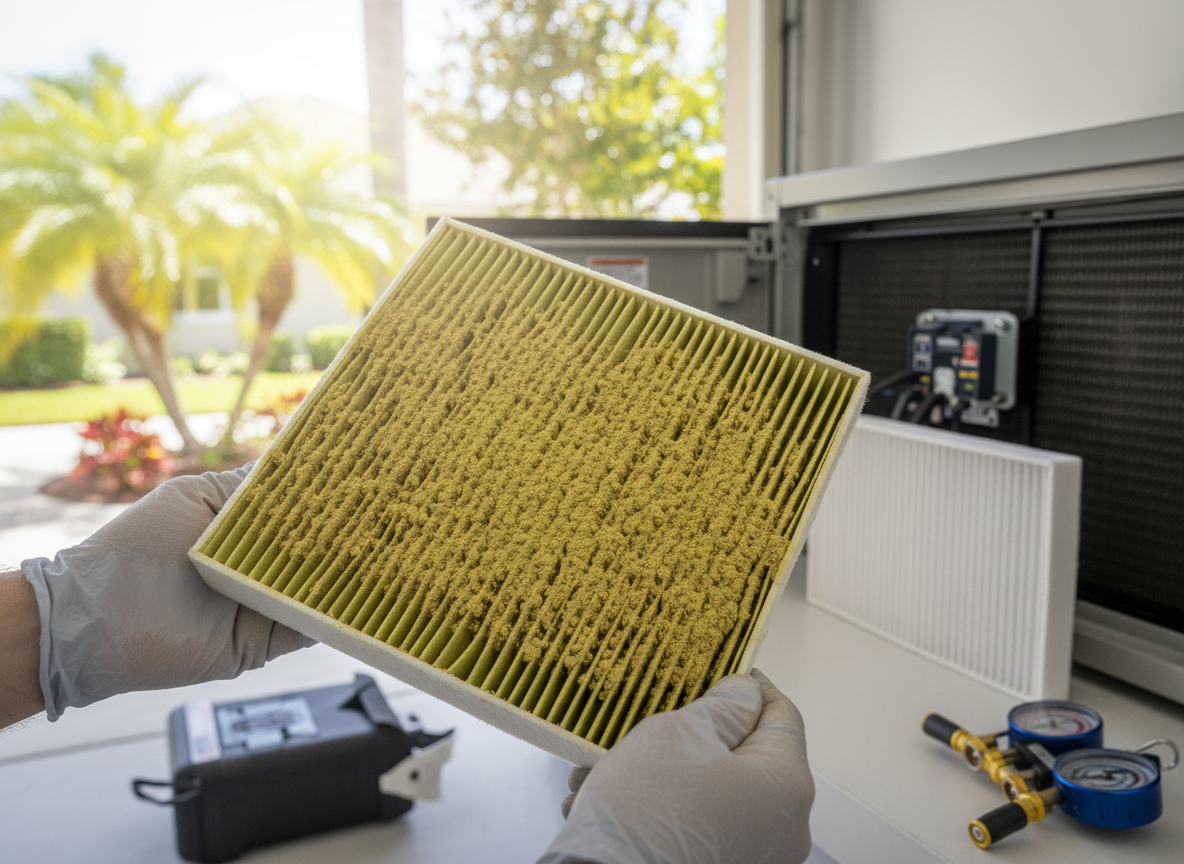
Spring pollen in Manatee County forces Lakewood Ranch homeowners to replace 1-inch pleated filters every 3–4 weeks instead of the standard 60–90 days. Oak, pine, and ragweed pollen peaks from late February through April coat outdoor coils and indoor media at rates that double restriction compared with winter months. The 24/7 team at 11707 FL-70 sees the same pattern each year across single-story ranch homes in Greenbrook and two-story models in The Lake Club.
Pollen Load on Filters Near Lakewood Ranch
Manatee County spring brings daily pollen counts above 8,000 grains per cubic meter on many days, far higher than inland counties. Homes in Summerfield and Edgewater sit on open lots with fewer windbreaks, so more particles reach return grilles. Standard fiberglass filters capture only the largest grains while finer pleated media rated MERV 8–11 trap the rest until the media darkens and static pressure rises. Restricted filters reduce airflow across the evaporator coil, raising supply-air temperatures by 3–5 °F and forcing longer run times. Residents who also battle high indoor humidity notice the difference first because pollen-laden air carries extra moisture that the coil must remove.
How Often to Inspect Filters in Lakewood Ranch Homes
Walk through each return grille once a week starting in mid-February. Pull the filter and hold it to bright light; if less than 50 % of the pleats remain visible, swap it immediately. In Country Club East and River Club neighborhoods, two-story layouts often place filters in attic returns where dust settles faster. Keep a dated photo on your phone so you can track the exact week the media darkens. When counts stay elevated for more than ten consecutive days, many homes need a second mid-month change even if the calendar says otherwise.
Effects on Airflow and Energy Use
A pollen-clogged filter increases blower motor amperage by 15–25 % and can push total system energy use up 10–12 % during the shoulder season. In Lakewood Ranch homes built after 2010 with variable-speed blowers, the motor compensates by ramping higher, shortening equipment life. The same restriction also allows pollen to bypass the filter and settle on the evaporator fins, creating an insulation layer that lowers heat-transfer efficiency. Homeowners who track their monthly electric bill notice the jump between March and May before any thermostat setting changes.
Practical Steps Before Peak Pollen Season
Stock MERV 8–11 filters sized exactly to your return opening—most Lakewood Ranch systems use 16x25x1 or 20x25x1. Mark the change-out date on the filter frame with a permanent marker. Pair filter checks with a pre-summer AC tune-up so the technician can verify static pressure after the new media is installed. If you notice whistling at the return or rooms that suddenly feel warmer, inspect the filter before calling for service. Link this habit to the broader plan outlined in Managing High Humidity Levels Inside Lakewood Ranch Homes so pollen control supports year-round moisture management.
When to Schedule Professional Help
If filter changes every two weeks still leave the system short-cycling, schedule an inspection of the evaporator coil and blower wheel. Technicians at the 11707 FL-70 location carry manometers to measure pressure drop across the filter and coil in one visit. Homes in Waterside and Azario Lakewood Ranch with pet dander plus pollen often benefit from upgrading to a 4-inch media cabinet that extends service intervals to 6–8 weeks. Keep records of each change date; consistent 3-week intervals signal the need for a deeper system evaluation rather than simply buying more filters.