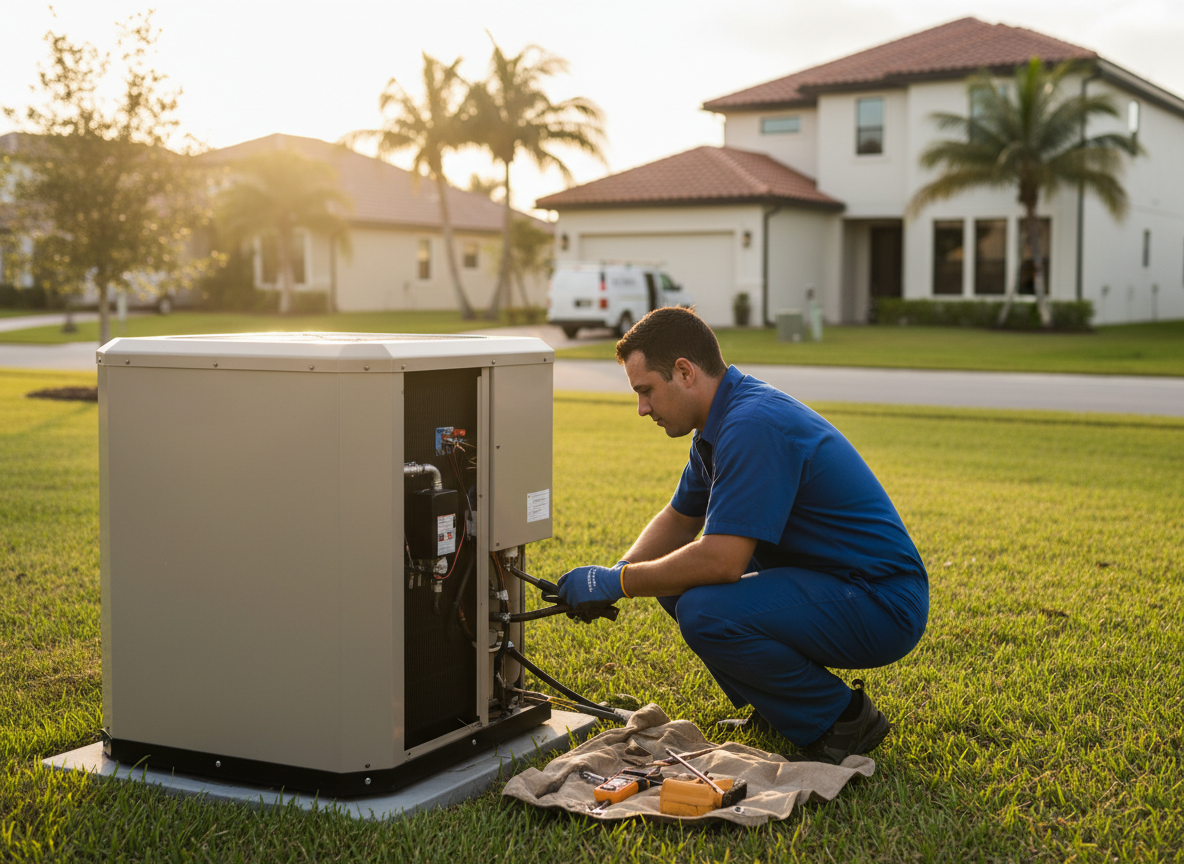
Lakewood Ranch homes range from 1990s builds to newer construction along routes like SR-70, with many featuring split-system heat pumps exposed to constant humidity and occasional storm surges. Technicians routinely encounter corroded outdoor coils and reversing valves that stick after years of salt-tinged air moving inland from the Gulf. Proper repair here requires checking both the air handler in the attic and the condenser pad for proper drainage, because standing water accelerates electrical failures in the contactors.
When a heat pump loses efficiency, the first step is confirming whether the issue stems from low refrigerant, a failing defrost board, or a thermostat misreading humidity levels common in Florida summers. Technicians test static pressure across the evaporator coil and inspect the auxiliary heat strips, which often engage unexpectedly during brief cold snaps. Using manufacturer-specific pressure-temperature charts prevents overcharging systems that already run near design limits in this climate.
Edge cases include units installed too close to irrigation spray or near live oaks that drop debris onto the fan motor. These conditions shorten capacitor life and cause the compressor to short-cycle. Repairs must also account for Manatee County permitting rules when replacing major components, ensuring any new wiring meets current energy code without altering the original footprint on the concrete pad.
Technician insight
In Lakewood Ranch, the thing that catches most people out with heat pump repair is how quickly the outdoor units corrode when pads sit in low spots that collect irrigation runoff near the Braden River tributaries. Homeowners often ignore the first signs of rust on the reversing valve until it sticks during a cold front.
Inconsistent Heating During Cold Snap
A homeowner near Lakewood Ranch's Main Street reported the heat pump blowing lukewarm air. Inspection revealed a failed defrost sensor coated in pollen and dust from nearby pastures. The sensor was replaced, the coil was rinsed, and the system resumed proper defrost cycles without auxiliary heat running continuously.
How it works
- 1
Initial System Assessment
Technician arrives at the Lakewood Ranch address, reviews error codes, and measures supply and return temperatures.
- 2
Component Diagnosis
Outdoor unit is opened to test capacitors, reversing valve, and defrost sensor while checking for corrosion from local humidity.
- 3
Targeted Repair
Faulty parts are replaced using matched components, coils are cleaned, and refrigerant levels are verified against manufacturer specs.
- 4
Performance Verification
System is run through heating and cooling cycles, electrical draw is recorded, and homeowner receives a written summary.
Pricing
Upfront quotes are provided after diagnosis; final cost depends on parts required and access conditions at the property.