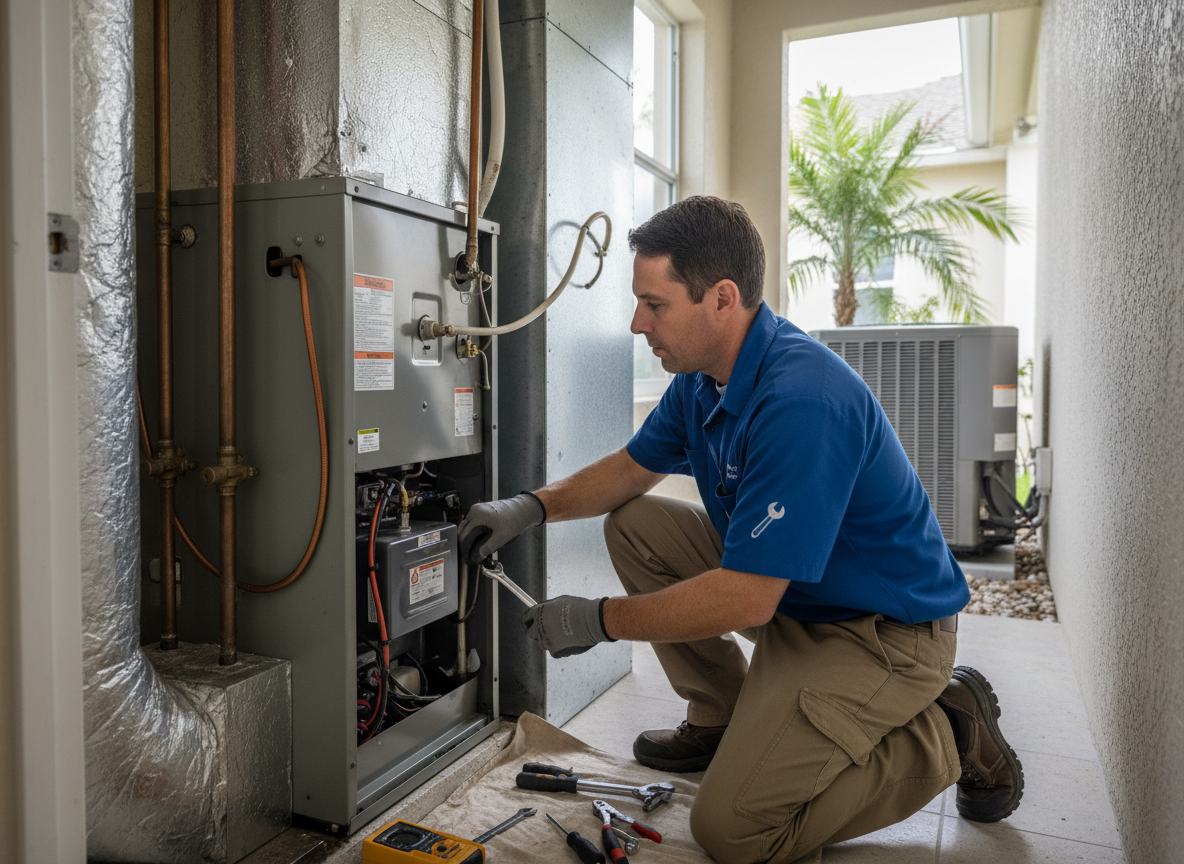
Lakewood Ranch homes built from the early 2000s onward often use heat pumps rather than traditional furnaces due to mild winters that still bring occasional cold snaps below 40 degrees. These systems sit outside year-round, exposed to salt-tinged humidity that accelerates corrosion on coils and electrical contacts. When a reversing valve sticks or a capacitor weakens, the unit may blow cool air instead of heat, and homeowners notice the change first during the short December through February window when temperatures dip at night.
Technicians at Quartzforge Home start every call by checking the thermostat wiring and indoor air handler before opening the outdoor unit. In many Lakewood Ranch neighborhoods such as Lakewood Ranch Country Club or the older sections near SR-70, restricted airflow from oversized filters or collapsed flex duct in attics is the real culprit behind weak heat. Replacing a failed defrost board on a heat pump requires confirming the unit is not in cooling mode first, otherwise the system can ice over the outdoor coil even when outdoor temperatures sit in the low 50s.
Code requirements in Manatee County call for proper condensate drainage on any new component installation to prevent moisture damage in the air handler closet. We also verify that the auxiliary heat strips engage during defrost cycles, a step that prevents cold air from entering the home during the brief but frequent morning temperature drops common here.
Technician insight
In Lakewood Ranch the thing that catches most people out with heating repair is how quickly the outdoor reversing valve corrodes from our year-round humidity even though we rarely see hard freezes. Homeowners often reset the thermostat multiple times thinking the issue is simple, but by the time we arrive the valve is already stuck and the compressor has been short-cycling for days.
Stuck reversing valve on a 2012 heat pump
Homeowner in the Country Club section reported warm air instead of heat during a 38-degree morning. We found the reversing valve solenoid coil had failed from corrosion and the defrost sensor was reading incorrectly. Replaced both parts, cleared the iced coil, and confirmed auxiliary strips engaged properly during the next cycle.
How it works
- 1
Initial Assessment
Arrive at the Lakewood Ranch address and confirm the symptom while the system is running.
- 2
Component Testing
Check capacitors, reversing valve, defrost sensor, and auxiliary heat strips with the unit powered.
- 3
Diagnosis Review
Explain the exact fault and required parts to the homeowner before any repair begins.
- 4
Repair and Verification
Replace or clean the failed part, then run the system through a full heat and defrost cycle.
- 5
Final Walkthrough
Show the homeowner the repaired area and confirm even heat delivery throughout the house.
Pricing
Upfront quotes given on site before any parts are ordered or work starts.