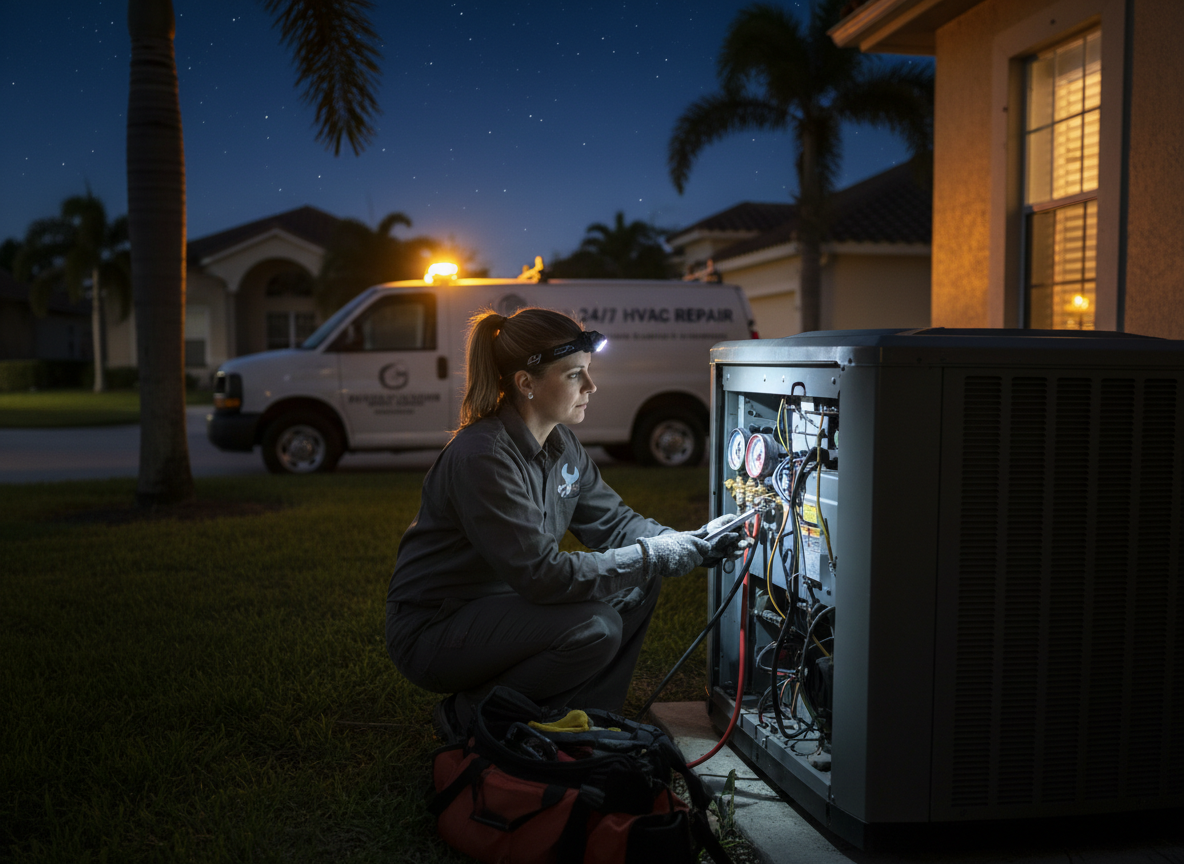
Lakewood Ranch homes built in the last twenty years often use high-efficiency heat pumps and variable-speed systems that struggle when summer humidity stays above 70 percent for weeks. Salt air drifting inland from the Gulf accelerates corrosion on outdoor coils and contactors, so a unit that ran fine in spring can fail hard once afternoon storms start rolling through. Technicians here carry extra capacitors and contactors on every truck because those parts fail most often after lightning strikes common along State Road 70.
Nighttime calls frequently involve thermostats that lost power during brief outages and never reset properly, leaving the system in a locked-out state. Older sections of the community with original ductwork sometimes have collapsed flex runs in attics where insulation has settled, restricting airflow and causing the evaporator to ice over even when the refrigerant charge is correct. Checking static pressure before any major component replacement prevents repeat visits that homeowners in Lakewood Ranch experience when only the obvious part is swapped.
Code requires proper condensate drainage on every new installation and repair that touches the air handler, yet many homes still have lines that slope the wrong way or terminate too close to the foundation. During heavy summer rains this creates standing water that feeds mold growth inside the return plenum. We always verify drainage slope and line termination distance before leaving the job because that single detail stops most callback complaints in this area.
Technician insight
In Lakewood Ranch the thing that catches most people out with 24/7 HVAC repair is how quickly attic ductwork collapses once the original flex starts to sag. Homes here have high ceilings and long runs; when the return side restricts, the system ices over even with a full charge. Homeowners often think it is a refrigerant issue until we measure static pressure and find the real restriction.
Overnight No-Cool Call on Lakewood Ranch Main Street
A heat pump stopped cooling during a humid July night. We found the contactor pitted from a recent storm and the condensate line clogged with algae common in this area. Replaced the contactor, cleared and treated the line, verified proper drainage slope, and restored cooling before dawn.
How it works
- 1
Call Intake
We take the call 24/7, note symptoms, and dispatch the nearest technician from our FL-70 base.
- 2
On-Site Diagnosis
Technician arrives, performs full system check including electrical, airflow, and refrigerant readings.
- 3
Quote and Authorization
We explain findings, provide upfront pricing, and get approval before any repair work begins.
- 4
Repair and Verification
Parts are replaced or adjusted, system is restarted, and performance is confirmed under load.
- 5
Final Walkthrough
Homeowner receives written summary of work performed and any follow-up recommendations.
Pricing
Upfront pricing is given after diagnosis; no work proceeds without approval.