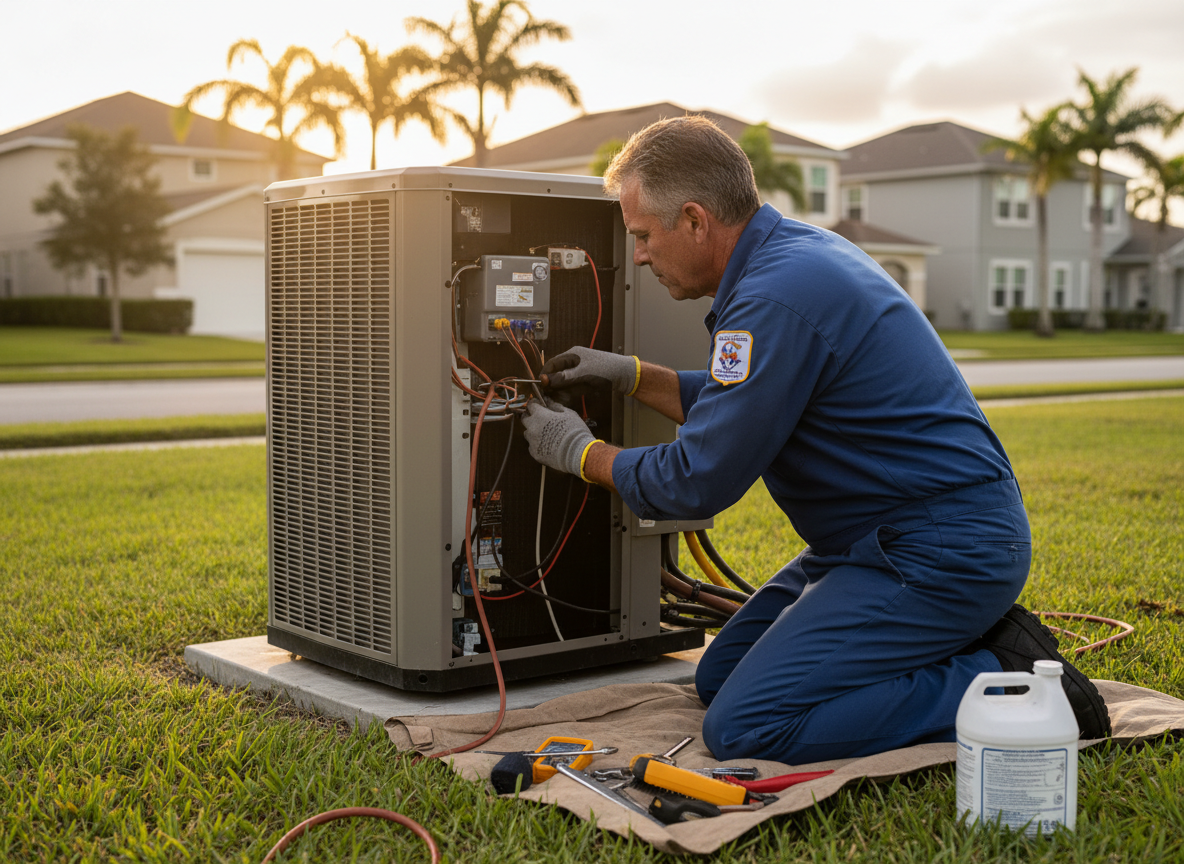
Lakewood Ranch homes often feature newer construction with tight envelopes that trap humidity, forcing AC systems to run longer cycles and wear components faster. Technicians see evaporator coils icing over when airflow is restricted by pollen buildup common in the area, or when condensate drains clog from the constant moisture load. Proper refrigerant checks and coil cleaning prevent compressor strain that shows up after repeated summer peaks.
Repair calls frequently involve capacitor failures or contactor pitting accelerated by the salt air influence that reaches inland from the coast. Technicians carry manifold gauges and recovery equipment on every truck because older R-22 systems still present in some original Lakewood Ranch builds require careful handling to meet current EPA rules. Skipping these steps risks releasing refrigerant and creating repeat callbacks.
When a system short cycles, the first check is always the thermostat placement and return air sizing, both of which can be undersized in certain floor plans common along SR 70. Technicians also inspect the outdoor unit pad settling that occurs on the sandy soils here, tilting the condenser and causing fan motor stress.
Humidity and Coil Care
Persistent moisture in Lakewood Ranch accelerates corrosion on aluminum coils. Annual cleaning with approved solutions extends equipment life and maintains dehumidification performance without introducing new leaks.
Technician insight
In Lakewood Ranch, the thing that catches most people out with AC repair is how quickly sandy soil settlement tilts the outdoor unit, stressing fan motors and causing early failure on homes built along the eastern sections near Lorraine Road.
Loss of Cooling on Hot Afternoon
Home in Lakewood Ranch lost cooling during peak afternoon heat. Inspection showed a failed run capacitor and a partially clogged drain line from high humidity. Capacitor was swapped and line cleared. System returned to normal temperatures and stayed running without short cycling.
How it works
- 1
Arrival and Safety Check
Technician arrives, verifies power at the disconnect, and confirms no immediate hazards before opening panels.
- 2
System Diagnosis
Full operational test measures temperatures, pressures, and amperage to isolate the fault.
- 3
Component Repair or Replacement
Failed parts such as capacitors, contactors, or valves are replaced with matching specifications.
- 4
Performance Verification
System is restarted and run through multiple cycles to confirm stable operation and proper drainage.
- 5
Homeowner Walkthrough
Findings and any filter or maintenance recommendations are explained before departure.
Pricing
Upfront quote provided after diagnostics; no hidden fees.