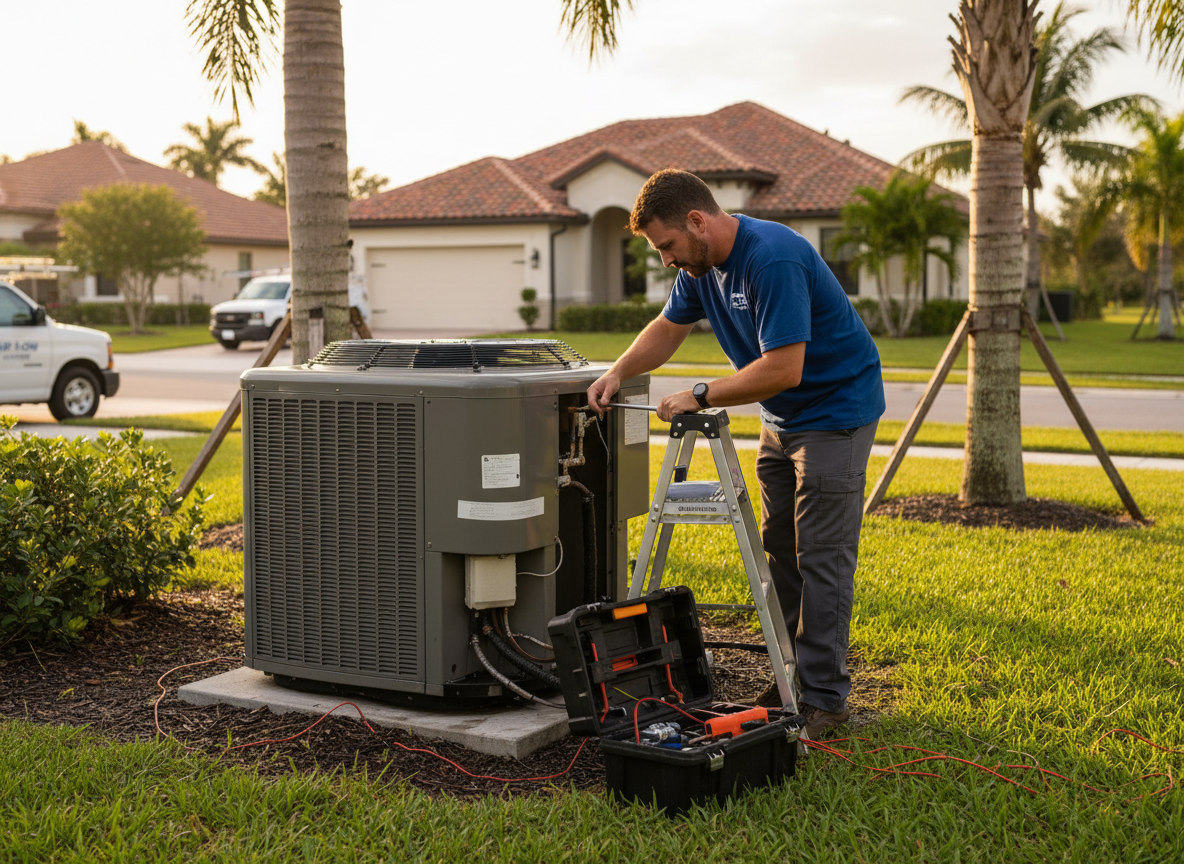
Lakewood Ranch homes built from the 1990s onward often feature packaged units or split systems tucked into garages or side yards where Florida heat and afternoon thunderstorms accelerate capacitor and contactor wear. When an emergency call comes in at 2 a.m. during a July heat wave, the first step is confirming whether the issue is a failed run capacitor, low refrigerant from a pinhole leak on the evaporator, or a tripped breaker from storm surge. Technicians carry factory-matched capacitors and leak sealant rated for R-410A to restore operation without waiting on parts.
High humidity here means coils can ice over quickly if airflow is restricted by pollen buildup or collapsed flex duct in attics. A no-cool emergency often traces to the condensate drain line clogging from algae growth common in the area’s warm, wet conditions, triggering the safety switch. Clearing the line and treating it with an algaecide tablet prevents repeat shutdowns the same week.
Older sections near Lakewood Ranch Main Street have ductwork in crawl spaces that can separate at joints after soil settling from heavy rains. Emergency repairs sometimes require sealing these joints with mastic and adding insulation sleeves rather than full replacement. Every call ends with a written report noting static pressure readings so homeowners know whether the next storm could trigger another outage.
Technician insight
In Lakewood Ranch the thing that catches most people out with emergency HVAC repair is how fast a clogged condensate line in the attic triggers the float switch during our long rainy season; homeowners keep resetting the thermostat thinking it is just the heat when the real issue is algae buildup that only shows up after the third or fourth storm.
Midnight no-cool call near Lakewood Ranch Town Center
The unit stopped blowing cold air at 11 p.m. during a humid stretch. We found a bulging run capacitor and a partially blocked drain line. Replaced the capacitor, cleared and treated the drain, and confirmed 14-degree temperature split before leaving.
How it works
- 1
Answer the call
Dispatch a technician within the hour from the Lakewood Ranch shop at 11707 FL-70.
- 2
Diagnose on site
Check thermostat, breakers, capacitors, and refrigerant levels while the system is still hot.
- 3
Perform repair
Replace failed parts or clear drains using stock carried on the truck.
- 4
Test and document
Run the system through a full cycle, record pressures, and leave a written summary.
Pricing
Upfront quote given before any repair work begins; payment due on completion.