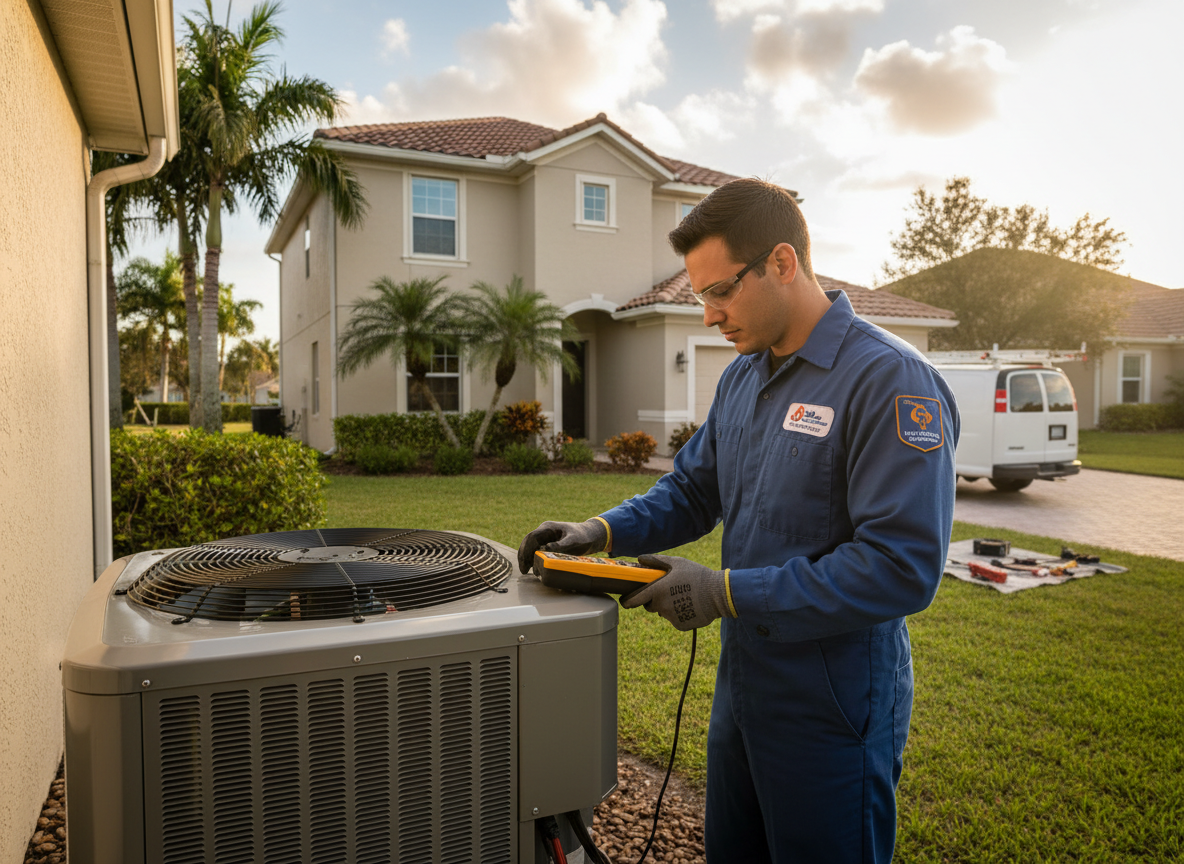
Lakewood Ranch homes built from the early 2000s onward often feature single-story layouts with attic-mounted air handlers that sit directly in the path of roof heat and constant moisture. During maintenance visits we pull panels to inspect the evaporator coil for the black mold streaks that form quickly when summer humidity stays above 70 percent for weeks. We also check the condensate drain line for algae clogs that back up into the secondary pan, a common trigger for ceiling stains in neighborhoods east of Lakewood Ranch Road.
The flat terrain and sandy soil around 11707 FL-70 mean outdoor condensers sit low and collect blowing sand during dry spells, which abrades fan blades and reduces airflow. On each visit we clear the coil fins with a no-rinse cleaner formulated for coastal pollen loads, then verify refrigerant charge against the data plate because even a five-percent loss raises energy use noticeably in the long cooling season. Homeowners who skip spring maintenance frequently see the system short-cycle once afternoon storms roll through and drop temperatures fast.
Filter and Airflow Realities
Pollen from live oaks and sabal palms peaks in February and March, loading standard one-inch filters in under three weeks. We measure static pressure across the blower before and after cleaning so homeowners know whether the duct system needs sealing at the plenum joints common in these builds.
Technician insight
In Lakewood Ranch the thing that catches most people out with HVAC maintenance is how fast the one-inch filters load with oak pollen and construction dust from nearby building sites; once airflow drops the evaporator coil ices over even when outdoor temperatures are only in the eighties, and the first sign is usually water stains on the ceiling rather than a hot house.
Clogged Drain in a Lakewood Ranch Residence
Homeowner reported water around the air handler in a 2012 build near SR-70. We found the primary drain blocked by algae and the secondary float switch not tripping. After clearing the line and treating it we restored normal drainage and confirmed no moisture remained in the pan.
How it works
- 1
System Inspection
We arrive at the Lakewood Ranch address and record model numbers, then check electrical connections, capacitor values, and safety switches on both indoor and outdoor units.
- 2
Coil and Drain Cleaning
Evaporator and condenser coils are cleaned to restore airflow, followed by flushing the condensate line to prevent backups during humid months.
- 3
Performance Verification
Temperature split, static pressure, and amperage draws are measured to confirm the system meets expected performance for Manatee County summer loads.
- 4
Filter and Report
We replace the filter with the correct size and leave a written summary of findings plus any recommended follow-up items.
Pricing
Maintenance calls are quoted upfront after we confirm system type and access conditions at the Lakewood Ranch property.