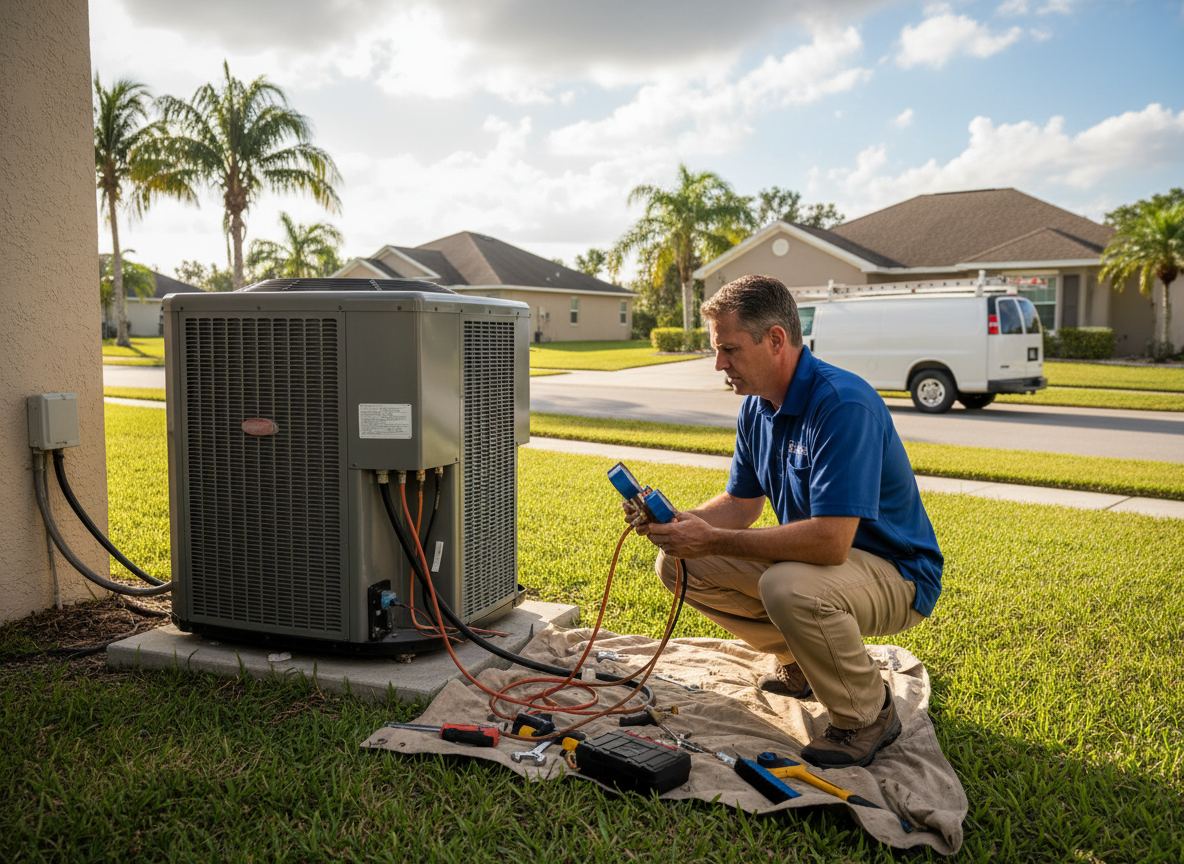
Lakewood Ranch homes built from the late 1990s onward often have packaged units or split systems tucked into garages or attics where summer heat and humidity push compressors and capacitors hard. Constant moisture in the air leads to coil corrosion and drain line clogs that turn minor issues into emergency shutdowns during July and August peaks. Technicians here routinely see short cycling caused by oversized units installed during the original construction boom, which forces extra wear on contactors and reversing valves.
Repair calls in this area frequently involve checking for refrigerant leaks at flare fittings that loosen from repeated thermal expansion in the Florida sun. Older ductwork in neighborhoods like Country Club East or Lakewood Ranch Country Club often has poor insulation that allows condensation and mold growth inside the lines, reducing airflow and triggering high-limit switches. A proper repair includes verifying static pressure and cleaning the evaporator before recharging so the system does not immediately fail again when afternoon storms spike humidity levels.
Code requirements in Manatee County call for proper condensate safety switches on all new or repaired installations, yet many existing homes still lack them. Skipping this step during a repair leaves homeowners exposed to ceiling damage when lines back up after heavy rain. Local techs also watch for salt-air corrosion on outdoor coils even a few miles inland from the Gulf, which shortens equipment life if not addressed during service.
Technician insight
In Lakewood Ranch the thing that catches most people out with HVAC repair near me is how quickly drain lines clog from the constant high humidity in homes built on the flat terrain of the old ranch lands. A single missed clog during a capacitor swap means the customer is back on the phone two weeks later with water-stained ceilings.
Clogged Drain and Failed Capacitor
Homeowner in Lakewood Ranch reported the system shutting off midday. Inspection showed a backed-up primary drain and a bulging run capacitor. Cleared the line, replaced the capacitor and float switch, then verified temperatures across the evaporator. Unit resumed normal operation without further short cycling.
How it works
- 1
Phone Intake and Scheduling
Gather symptoms, model numbers, and access details while confirming 24/7 arrival window from the Lakewood Ranch shop.
- 2
On-Site Diagnostic
Test electrical components, measure refrigerant pressures, inspect coils and drains, and check for code compliance issues common in Manatee County homes.
- 3
Upfront Repair Quote
Explain findings and parts needed, then provide written options before any work begins.
- 4
Repair and Verification
Complete the fix, clear drains, test airflow and temperatures, then confirm the system holds through a full cycle.
Pricing
Diagnostic fee applies toward repairs; all work quoted upfront with no hidden charges.