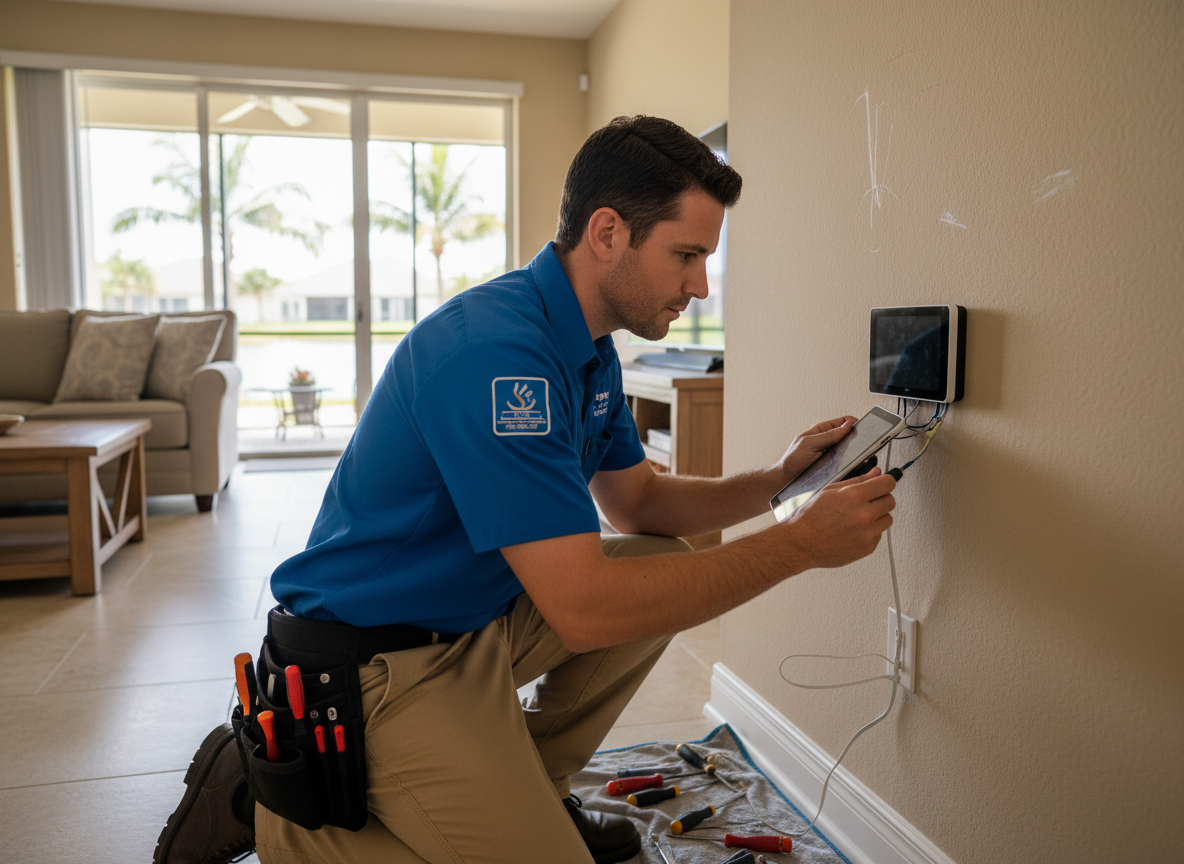
Lakewood Ranch homes range from 1990s builds to newer constructions, often featuring single-stage or dual-stage AC units that must handle year-round high humidity. Installing a smart thermostat requires verifying C-wire presence or adding a power extender kit, because many local systems were wired before smart controls became common. We check for compatibility with existing air handlers and confirm the thermostat can maintain precise humidity setpoints without short-cycling the compressor during afternoon storms.
Wiring runs in Lakewood Ranch crawl spaces and attics frequently encounter moisture and heat, so we inspect for corrosion on low-voltage connections before terminating new thermostat wires. Proper placement avoids direct sun from west-facing windows common in Ranch homes and keeps the sensor away from kitchen or laundry heat sources. After mounting, we test communication with the HVAC control board and confirm the unit reports accurate indoor conditions to the homeowner app.
Florida energy codes and Manatee County permitting rules require that any control change preserves proper staging and does not override factory safety limits on the outdoor unit. We document the original wiring, label every conductor, and leave the old thermostat with the homeowner for reference during warranty work. Final setup includes enrolling the device on the homeowner Wi-Fi and demonstrating how to create schedules that reduce runtime during peak summer humidity spikes.
Technician insight
In Lakewood Ranch, the thing that catches most people out with Smart thermostat installation is the number of 1990s and early 2000s homes where the original thermostat wire bundle never included a C-wire and has already started to corrode in the attic. Pulling a new run through blown-in insulation without disturbing the existing low-voltage lines takes extra time, and skipping the corrosion check is what leads to intermittent power loss three months later.
Lakewood Ranch ranch home with corroded wiring
Homeowner reported the old thermostat losing power during long AC runs. We found the original 18-gauge bundle had green corrosion at the air-handler junction. We replaced the run with new 18/5, added a power extender at the thermostat, and confirmed stable 24-volt supply before handing over the new unit.
How it works
- 1
System Assessment
We inspect the existing HVAC equipment, wiring, and thermostat location at your Lakewood Ranch address to confirm compatibility.
- 2
Compatibility Check
Technicians verify C-wire status or install a power kit and test communication with the air handler and outdoor unit.
- 3
Mounting and Wiring
The new thermostat is mounted on an interior wall, wires are terminated, and connections are secured against local humidity.
- 4
Testing and Handover
We run the system through heating and cooling cycles, confirm app connectivity, and walk through schedule options.
Pricing
Upfront quotes provided after on-site compatibility check; final cost depends on wiring condition and any needed power kit.